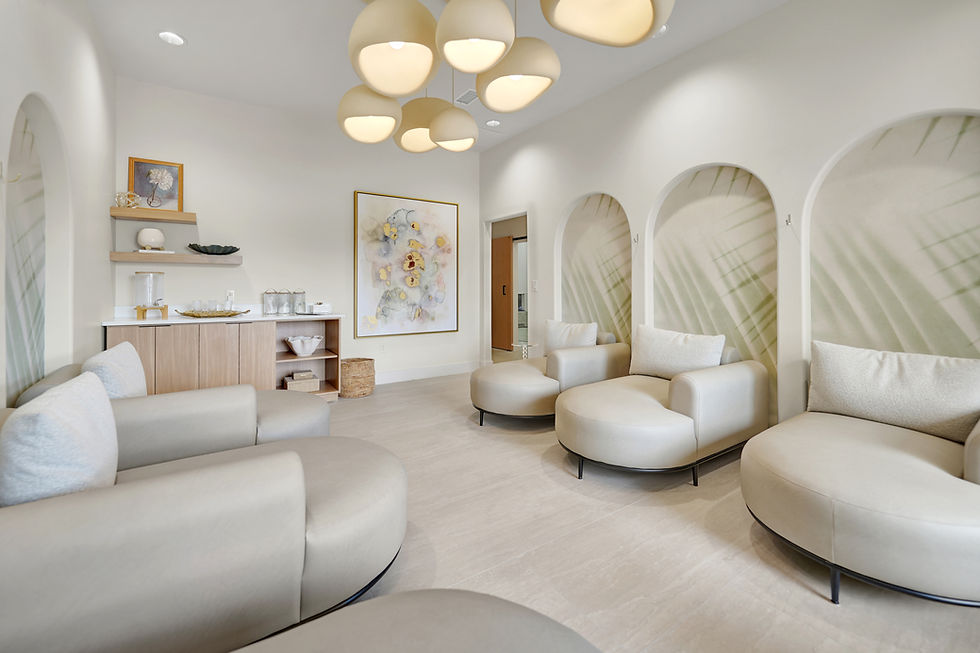
How to Design for Future Growth: Flexible Commercial Spaces That Adapt

Commercial buildings are long-term investments — and in high-growth regions like West Texas, companies often scale faster than expected. The smartest business owners design their buildings not just for today’s needs, but for who they’ll be 5, 10, or even 20 years from now.
At Luxury Construction Management by Luxury Enterprises, we help clients plan, design, and build commercial spaces that can adapt, expand, and perform long-term without requiring major reconstruction.
Below are the key principles smart business owners follow when designing for future growth.
Start with a “Long-Range Vision” Design Conversation
Many commercial building problems begin during the earliest planning phases — simply because owners focus only on today.
During pre-construction, we encourage clients to explore questions such as:
Where do you see your company in 5–10 years?
Will staffing levels increase significantly?
Will operations expand (adding equipment, departments, divisions)?
Will you need additional warehouse, office, or customer-facing space?
Are you planning for new services or business lines in the near future?
This early strategic discussion guides the architectural and engineering decisions that follow. A good construction manager helps identify hidden future constraints before concrete is poured.
Choose a Building Layout That Allows for Easy Expansion
A flexible commercial building starts with a layout that anticipates change.
Smart Expansion-Ready Layout Strategies Include:
Placing the building on the lot so it can grow laterally
(leaving yard space open on at least one or two sides)
Using modular interior layouts that can be reconfigured with minimal demolition
Designing corridors, utility rooms, and framing to support additional wings or added square footage later
Positioning mechanical and electrical systems so expansion doesn’t require major relocation
These design decisions aren’t more expensive — they’re just smarter.
Build a Scalable Electrical, Mechanical & Plumbing Infrastructure
One of the biggest mistakes commercial owners make is designing MEP systems only for current needs. Upgrading them later is costly and disruptive.
Future-ready buildings include:
Electrical panels sized with additional load capacity
HVAC systems designed in zones, allowing for easy additions
Extra conduit runs for future wiring, data, or security lines
Water and sewer lines positioned for expansion
Roofing structures capable of supporting additional equipment
Our team works with engineers to size systems strategically so growth is seamless, not painful.
Use Modular Walls, Systems & Materials
Modular elements make it simpler to adapt your building without major construction.
Examples of modular flexibility:
Demountable or reconfigurable wall systems
Raised-access flooring to easily modify power/data locations
Non-load-bearing partition walls
Ceiling grids that allow lighting and HVAC changes
Open-concept areas that can be subdivided later
This approach is especially effective for offices, medical suites, retail spaces, and corporate buildings.
5. Plan for Technology Growth Early
Technology needs always increase — never decrease.
Future-ready commercial buildings should include:
Structured cabling systems with abandoned capacity
Server/data rooms with planned square footage expansion
Extra backbone conduits for future fiber runs
Smart building systems (security, climate, access control) designed for additional sensors and devices
Automation-friendly infrastructure (IoT, building controls, monitoring tools)
Adding future tech later can be expensive if the building wasn’t designed with it in mind.
6. Consider Multi-Use & Convertible Spaces
Sometimes growth doesn’t require building more — it requires using space more intelligently.
Consider spaces that can be converted as your needs change:
Conference rooms → additional offices
Break rooms → collaboration hubs
Open workspaces → department clusters
Underutilized storage → operational areas
Lobby areas → retail or client-service zones
Our design team helps clients identify which spaces can do “double duty” or be adapted later with minimal investment.
Prepare the Site Itself for Future Growth
Often, the biggest limitation to expansion isn’t the building — it’s the site.
We help clients plan site features early so future growth is smoother:
Grading the land to allow for future construction
Designing parking lots so they can be expanded or rerouted
Leaving utility access points available for future tie-ins
Ensuring drainage systems can handle a larger footprint
Positioning retention ponds and drives strategically
Planning ahead during site layout avoids costly redesigns and land rework later.
Use a Construction Manager Who Builds for the Future
The most important factor in designing for growth is having the right construction manager guiding the process. Luxury Construction Management works directly with your architect, engineers, city officials, and general contractors to ensure every decision made today supports your long-term vision.
We help you:
Forecast future space needs
Optimize site placement and layout
Select expansion-ready building systems
Avoid design decisions that limit growth
Keep your project on time, on budget, and future-proofed
When you build smart from the start, you save tremendous time and money down the road.
Build Today With Tomorrow in Mind
A flexible, scalable commercial building isn’t just a construction project — it’s a strategic investment in your business’s long-term success. By incorporating future-ready design principles early, you ensure your space can grow right alongside your company.
If you’re planning a new build or thinking about expanding your existing space, Luxury Construction Management by Luxury Enterprises can guide you from concept to completion. Contact us today to schedule a consultation and start building for the future.